Digital Marketing · Events
How to Measure the ROI of a Corporate Event
Editorial TeamLast updated
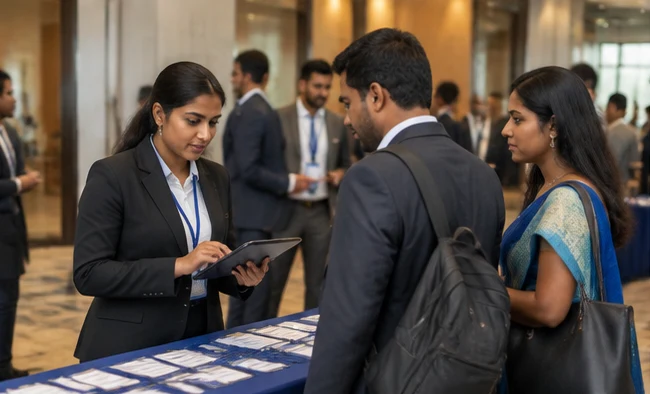
Events take a lot of money and effort: venue, food, AV, production, staff and promotion. Yet many companies in Sri Lanka judge an event only on whether "it went well". Measuring return on investment (ROI) shows whether an event was worth it, and how to make the next one better.
Experienced teams handling event management Sri Lanka projects now build measurement into the plan from the start, not after the event.
Step 1: choose the goal
| Event type | Typical goal | Main KPI |
|---|---|---|
| Product launch | Awareness and sales | Media coverage, reach, sales in following weeks |
| Exhibition or trade fair | Leads | Qualified leads, cost per lead |
| Customer or dealer event | Relationships and sales | Repeat orders, deal value |
| Conference or seminar | Thought leadership and leads | Attendance, leads, follow-up meetings |
| Staff event | Engagement and retention | Staff feedback, participation |
Step 2: list every cost
Include:
-
venue and service charges;
-
food and beverages;
-
AV, staging and LED screens;
-
production, décor and printing;
-
entertainment and MC;
-
staff time and temporary staff;
-
promotion: ads, invitations, PR;
-
photography and video.
Missing costs make ROI look better than it is.
Step 3: track results before, during and after
Before
-
Registrations and RSVPs.
-
Reach and engagement from promotional posts and ads.
During
-
Attendance and check-ins.
-
Leads collected (QR codes, forms or a simple registration sheet).
-
Live social media reach and mentions.
After
-
Follow-up calls and meetings booked.
-
Sales or deals linked to event leads.
-
Views of highlight videos and photo albums.
-
Attendee feedback survey results.
Step 4: calculate ROI
ROI (%) = (Value generated − Total cost) ÷ Total cost × 100
Example: an event costs LKR 1,500,000 and generates sales worth LKR 2,400,000 in profit over the next two months. ROI = (2,400,000 − 1,500,000) ÷ 1,500,000 × 100 = 60%.
Use profit, not revenue, for a fair result.
For awareness events, measure cost per attendee, cost per lead and reach instead, and compare them with other channels such as ads.
Step 5: improve the next event
-
Which promotion channel brought the most registrations?
-
Which activities created the most leads?
-
How fast were leads followed up, and how many converted?
-
What did attendees say?
Tips to increase event ROI
-
Collect leads digitally, with a QR code to a short form.
-
Follow up within 48 hours, while interest is high.
-
Film the event and turn it into weeks of social media content.
-
Choose the right timing and venue for your audience.
-
Partner with sponsors to share costs. See our event sponsorship guide.
If you work with an agency on ongoing marketing, include events in your first 90 days planning so they connect to your wider campaigns.
Frequently asked questions
How do you measure the ROI of an event?
Set a clear goal, add up every event cost, track results such as leads, sales and reach before, during and after the event, and then calculate ROI as value generated minus total cost, divided by total cost, times 100.
What KPIs should I track for a corporate event?
Common KPIs include registrations, attendance, leads collected, cost per lead, follow-up meetings, sales generated, media coverage, social media reach and attendee satisfaction.
How can I collect leads at an event?
Use a QR code linking to a short form, a digital registration system, or tablets at your booth. Capture name, contact details and interest so your team can follow up quickly.
What if my event's goal is awareness, not sales?
Measure cost per attendee, reach, media coverage and engagement, and compare them with what the same awareness would cost through ads or other channels.